
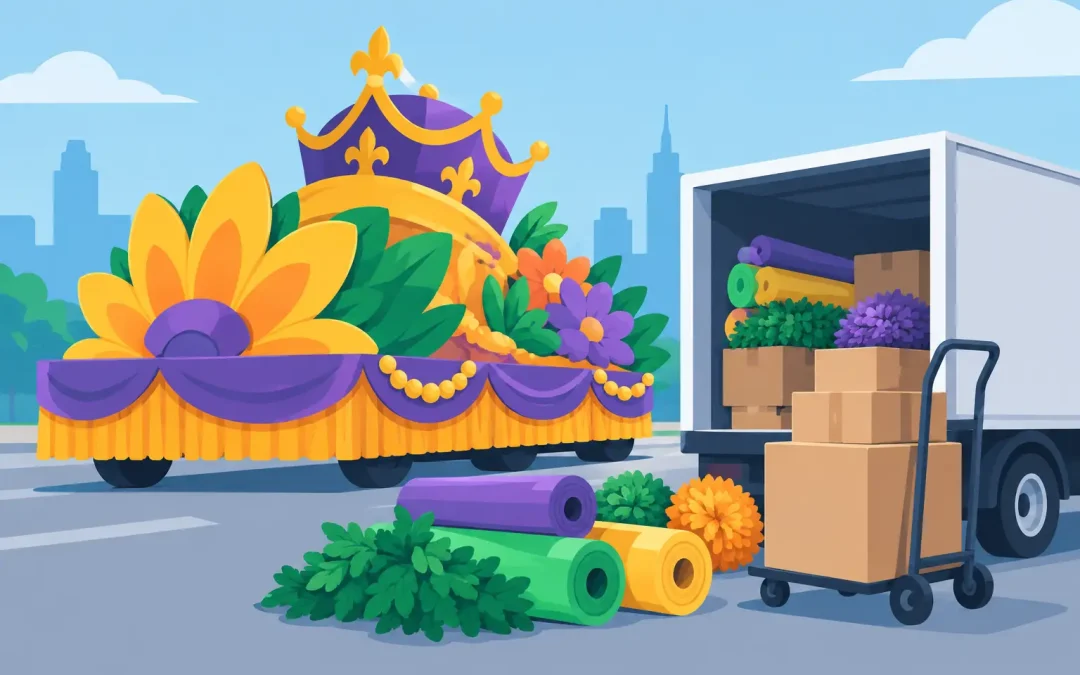
A parade deadline has a way of becoming real all at once. The trailer is booked, volunteers are asking what to do next, and the idea on the sketch still needs to become a finished float. This rush parade order guide helps you make smart material decisions quickly, without ordering more than you need or waiting on supplies that will not arrive in time.
At ParadeFloatStuff.com, we have worked with float builders for generations. We know a late order does not always mean poor planning. Weather delays, last-minute entries, changed trailers, missing supplies, and a fresh burst of committee enthusiasm can all put a project on a tight clock. The goal is not perfection on day one. It is getting the right materials in hand so your crew can build a float that looks finished from the curb.
Start Your Rush Parade Order With the Deadline
Before choosing colors or decorations, write down three dates: the parade date, the date your crew will build, and the latest day materials can arrive without creating a problem. For many groups, the real deadline is not parade morning. It is the evening before the build, when someone needs time to sort supplies, cut covering, and set up work areas.
Next, check the shipping cutoff before placing your order. Orders placed before 2:30 PM Eastern can ship the same business day, which can make a major difference when time is short. That cutoff does not replace delivery transit time, though. A shipment still needs enough time to travel to your location, and holidays or severe weather can affect carriers.
If the calendar is especially tight, contact a knowledgeable staff member before checking out. Share your parade date, delivery ZIP code, float dimensions, and basic theme. A quick conversation can prevent the most expensive rush-order mistake: buying decorations that are attractive but do not cover the space you actually have.
Measure the Float Before You Fill the Cart
A rushed order should still begin with a tape measure. Measure the length and height of each side, the front, the back, and any platform rails, signs, boxes, or special structures that need coverage. Do not assume the trailer dimensions tell the whole story. Wheel wells, ramps, curved corners, and raised components all change the amount of material required.
For basic side coverage, multiply length by height for each section, then add the sections together. Add extra material for overlaps, trimming, and mistakes, especially when volunteers are applying it for the first time. A modest overage is usually cheaper than stopping the build because one side is short.
Think about viewing distance, too. Parade spectators will see the float from sidewalks and bleachers, not from six inches away. Large blocks of color, bold lettering, and well-defined shapes often read better than tiny details. When time is limited, cover the major surfaces first and save intricate accents for the end.
Choose Materials That Work Hard
Floral sheeting is often the fastest way to create a full, textured float surface. It gives trailers, walls, and shaped forms a polished look without requiring every inch to be hand-decorated. Two-ply fringe adds movement and works well along skirting, borders, railings, and layered color bands.
Festoon and garland are useful when you need to define edges, outline shapes, or add fullness to an area that looks flat. Deco puffs and pomps can create quick color impact on signs, corners, and focal points. Glitter can add sparkle, but use it as an accent rather than relying on it to carry the design. It looks best when the main color coverage is already complete.
For a rush project, match the material to the job. Sheeting is a better choice for broad coverage than trying to fill a trailer side with individual puffs. Fringe is often faster for a clean skirt than building a complicated layered border. The simplest material plan is usually the one your volunteer crew can finish well.
Build the Order Around a Clear Visual Plan
You do not need a professional rendering to make a good float. A simple sketch with the float’s front, sides, and back is enough. Mark your base color, a second color, the theme focal point, and the lettering. This prevents an order from turning into a collection of nice-looking items that do not form one finished display.
A dependable rush-order formula is a base covering, an edge treatment, a focal point, and readable lettering. For example, a school spirit float may use floral sheeting in school colors, fringe around the lower edge, a large mascot panel, and foam-core letters for the school name. A patriotic entry may use red, white, and blue coverage with festoon accents and large lettering that can be read across the street.
Keep the number of colors under control. Two or three strong colors are often more effective than six colors competing for attention. If the event has a required theme, make that theme visible in the main message or centerpiece. Spectators and judges should understand the idea in a few seconds.
Put Lettering Near the Top of the List
Lettering is one of the most frequently overlooked parts of a last-minute parade order. A float can have great color and texture, but if nobody can read the organization name, message, or theme, much of the effort is lost.
Choose letters large enough for the distance between the float and the crowd. Shorter phrases work best. “Go Tigers,” “Serving Our Community,” or “Happy Holidays” will read more clearly than a long sentence. Foam-core letters are a practical option because they create a crisp message without requiring a crew member to hand-paint every character under pressure.
Confirm spelling before ordering, including school names, sponsor names, and dates. Have one person who did not create the sign read it aloud. That small pause can save a very visible problem.
Protect the Build Schedule, Not Just the Delivery Date
Once supplies are on the way, assign jobs before the boxes arrive. One team can prep the trailer and attach base covering. Another can sort colors, prepare letters, and assemble focal pieces. A third can handle tools, cleanup, and last-minute repairs. Clear roles keep ten volunteers from standing around waiting for the first instruction.
Bring more fasteners and basic tools than you think you will use. Construction accessories are easy to forget until a crew is holding material against a trailer with no way to secure it. Have scissors, utility knives, measuring tapes, markers, gloves, and a safe work surface ready before the build begins.
Weather changes the plan. If rain, wind, or cold is expected, choose a covered work area when possible and allow extra time. Materials can be harder to handle in wet or windy conditions, and adhesive choices may depend on the surface and temperature. If the float will travel at road speed before the parade, inspect every edge, letter, and lightweight accent for secure attachment.
When You Need to Simplify, Simplify With Purpose
A rushed float does not need every original feature to make an impression. If you have to choose between a fully covered float with bold lettering and a complicated centerpiece on a partly finished trailer, finish the coverage and message first. A clean, complete design looks intentional.
The same applies to the back of the float. If parade spectators will see it, give it enough coverage and a finished edge. It does not always need the same detail as the primary viewing side, but exposed construction materials can make an otherwise strong float feel unfinished.
If you are ordering for a large school, church, civic group, or festival committee, ask about quantities early. Bulk needs, custom sizing, and purchase-order arrangements can require a little more coordination than a small individual order. That planning is worthwhile when you need consistent color across several floats or a large display.
A Better Last-Minute Build Starts With One Call
When the parade is close, speed matters, but clear information matters just as much. Have your measurements, colors, theme, ZIP code, and needed-by date ready. Then choose dependable, purpose-built float supplies that your team can apply quickly.
No order is too small, and a large order does not have to become overwhelming. A few practical decisions made early can turn a rushed week into a float your group is proud to see roll down the parade route.